


.png)
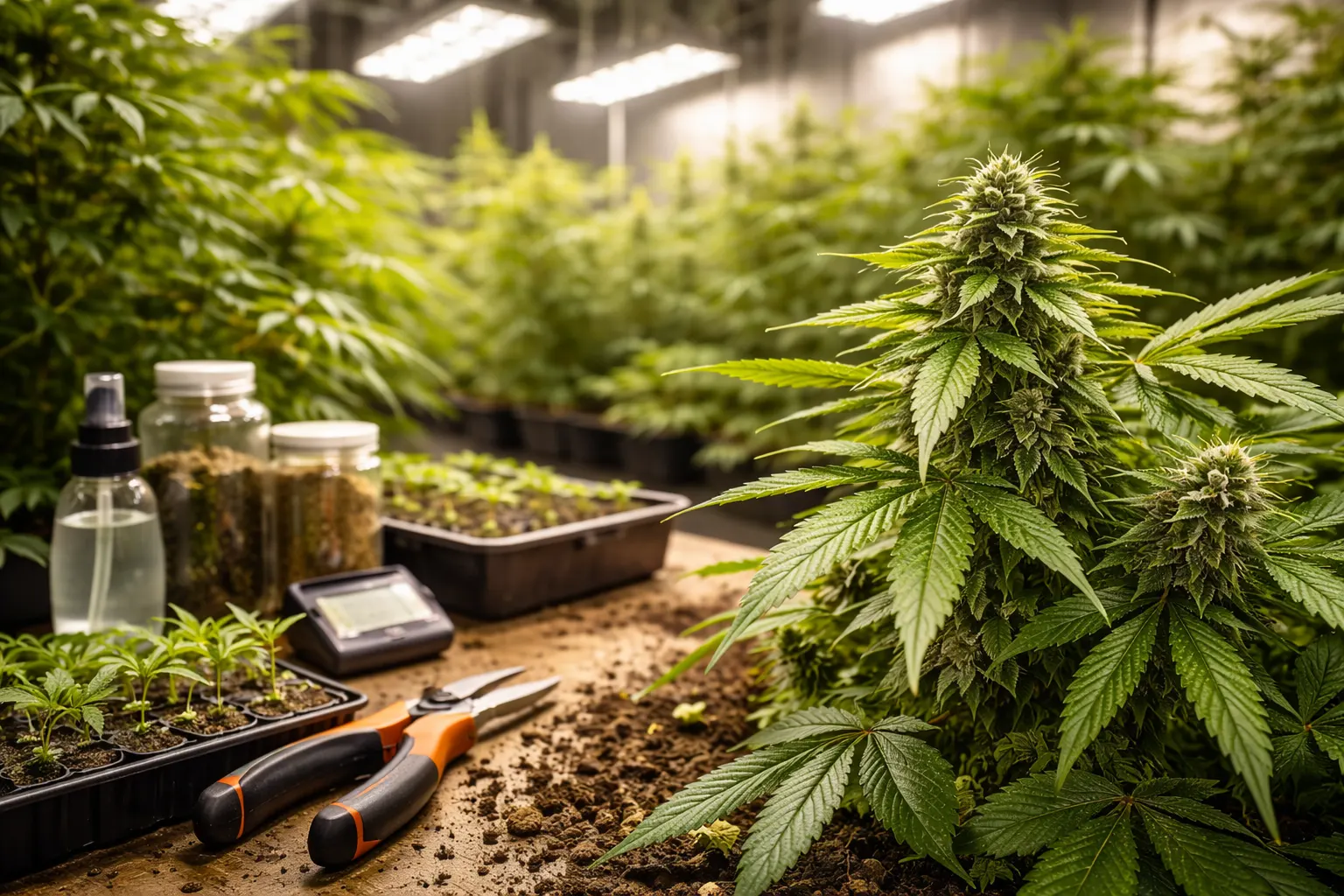
If you buy cannabis but have never thought much about how it gets grown, you’re not alone. Most people focus on the final product—flower, pre-rolls, vapes, or edibles—not what happened before it reached the shelf. But understanding the basics can actually help you shop smarter. This cannabis cultivation guide explains how cannabis is grown, why cultivation matters, and what it can tell you about quality, consistency, and overall product experience.
In simple terms, cannabis cultivation is the process of growing cannabis plants from early development through harvest, drying, and post-harvest preparation. And yes, how a plant is grown can influence its smell, appearance, potency, and even how clean or consistent the final flower feels.
Let’s start with the most direct answer.
Cannabis cultivation is the controlled process of growing cannabis plants for flower or other cannabis products. It includes planting, environmental control, feeding, monitoring, harvesting, drying, and curing.
If you’ve ever wondered what cannabis cultivation from a consumer point of view is, think of it this way: it’s everything that happens before cannabis becomes the product you see at a dispensary.
That includes:
This matters because cannabis plant cultivation is not just farming—it’s quality control from start to finish.
A fair question. After all, if the product looks good and smells good, why care?
Because the cannabis growing process can affect what you actually buy.
In other words, two products can look similar on a menu and still be very different because of how cannabis is cultivated.
The U.S. National Library of Medicine and other cannabis-focused research sources have repeatedly shown that environment, cultivation style, harvest timing, and post-harvest handling all influence cannabinoid and terpene outcomes.
So yes, cultivation matters more than many consumers realize.
If you’re reading a cannabis cultivation guide for the first time, this is one of the most useful sections to understand.
There are three main cannabis cultivation methods most consumers hear about:
Each one comes with tradeoffs.
Indoor cannabis is grown inside a controlled environment, usually under artificial lighting.
Indoor flowers are often associated with:
Indoor cultivation often uses more energy than other methods.
The U.S. Department of Energy has noted that indoor cannabis cultivation can be highly energy-intensive due to lighting, HVAC, and environmental control demands.
Outdoor cannabis is grown under natural sunlight in open-air environments.
Outdoor flowers may be associated with:
Outdoor plants are more exposed to:
Greenhouse growing is the middle ground between indoor and outdoor.
It uses:
Greenhouse flowers often aim to balance:
Here’s a quick comparison:
This is one reason cannabis cultivation methods show up more often on product packaging and dispensary menus today.
This is where things get easier to visualize.
The cannabis growing process usually moves through a few main plant stages before harvest.
This is the first stage, when the seed begins to sprout.
At this point, the plant is very delicate and just beginning to develop.
Once the plant begins growing above the medium, it enters the seedling stage.
This stage is marked by:
This is the main growth period where the plant gets bigger, stronger, and leafier.
During this stage, cannabis plant cultivation focuses on:
This is when the plant begins producing flowers.
This stage is one of the most important parts of how cannabis is cultivated because it directly shapes the final product consumers care about most.
Once flower maturity is reached, the plant is cut and prepared for drying.
This is technically post-harvest, but it is still essential to product quality.
Leafly explains that after harvest, cannabis is typically dried and then cured in controlled storage to help preserve aroma, moisture balance, and overall quality.
This is where a lot of the “why does one flower feel better than another?” conversation starts.
Even within the same strain name, quality can vary based on growing conditions.
Genetic influence:
Light intensity and consistency affect:
These environmental factors can affect:
Cannabis plants need a balanced nutrient plan to support healthy development.
Air movement and clean growing conditions help reduce stress and support better flower development.
Harvesting too early or too late can affect:
This is why a proper cannabis cultivation guide should never stop at “indoor vs outdoor.” The details inside the grow matter too.
A lot more than people think.
The smell and flavor of cannabis often come from terpenes. These compounds are shaped not only by genetics, but also by cultivation and post-harvest handling.
THC and other cannabinoid levels are influenced by:
A recent scientific review on cannabis postharvest handling found that trimming, drying, and curing practices can affect measurable cannabinoid and terpene outcomes.
So if you’ve ever bought the “same strain” twice and had two different experiences, cultivation may be part of the reason.
Consumers usually do not get to tour the grow facility. But you can still look for clues.
Look for a flower that appears:
Product labels may tell you:
This is one of the most useful takeaways from any cannabis cultivation guide: better-informed consumers usually make better buying decisions.
Not necessarily.
That’s a very common misunderstanding.
Sometimes, better cannabis plant cultivation simply means:
In other words, quality is not just about chasing the highest number on the label.
This is where all of this becomes useful in real life.
When you understand the basics of how cannabis is cultivated, you can shop with better context.
Instead of only asking:
You can ask:
Those questions usually lead to better recommendations than just THC percentage.
If you only take a few things away from this cannabis cultivation guide, let it be these:
The goal is not to become a grower overnight. It’s simple to understand what you’re buying a little better. That kind of consumer education is exactly why many readers turn to trusted dispensary resources like Green Remedy when trying to make more informed choices.
What is cannabis cultivation? It is the process of growing cannabis plants from early development through harvest, drying, and curing before they become consumer-ready products.
The main cannabis cultivation methods are indoor, outdoor, and greenhouse growing.
How cannabis is cultivated usually includes germination, seedling growth, vegetative growth, flowering, harvest, drying, and curing.
Cannabis plant cultivation matters because it can affect quality, aroma, consistency, potency, and overall flower experience.
The cannabis growing process for dispensary flower includes plant growth, environmental control, harvest timing, trimming, drying, curing, and final packaging.
.avif)
License: C10-0000377-LI | 2928
Hilltop Mall Road, Richmond,
CA 94806. (510) 758-7898