

.png)
Shopping for cannabis in Richmond has changed quite a bit since the early days. Back then, you mostly relied on the look or the smell of the flower to guess its quality. Today, the process is much more scientific and transparent. When you pick up a jar or a pack of gummies, you are looking at a wealth of data designed to keep you safe. However, all those numbers and symbols can be overwhelming if you don't know what you are looking at. Learning how to read cannabis labels is the best way to ensure you are getting exactly what you paid for. It helps you understand the potency, the purity, and the specific effects you can expect. In 2026, transparency is the gold standard, and being an informed consumer means knowing how to interpret the results of professional cannabis product testing.
When you walk into a dispensary, you aren't just buying a plant; you are buying a regulated consumer good. Knowing how to read cannabis labels allows you to skip the guesswork. It tells you the ratio of THC to CBD, which is the biggest factor in how the product will make you feel. Beyond just the high, the label provides proof of cannabis safety testing. This matters because it confirms the product is free from harmful contaminants. If you use cannabis for medical reasons, this information is even more vital. You need to know that your medicine is consistent and clean every single time you buy it.
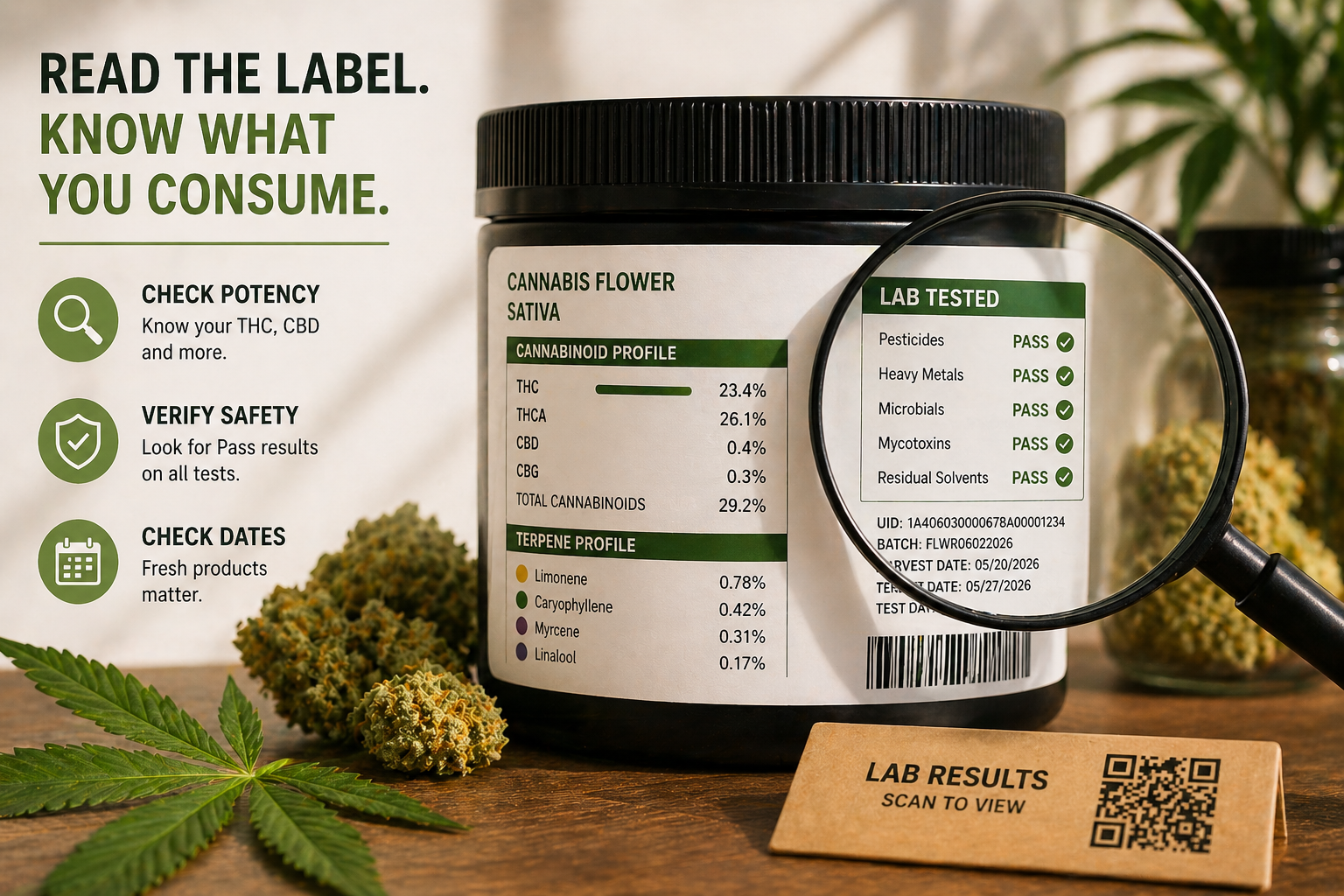
In California, the law requires some of the strictest cannabis product testing in the world. Every batch of cannabis sold in a licensed shop must go through a rigorous screening process. Labs look for a variety of things that you definitely don't want to ingest. This includes residual solvents from the extraction process, harmful pesticides used during growth, and various types of bacteria or fungi. By understanding how to read cannabis labels, you can find the section that confirms the batch passed these tests. It is a shield that protects your lungs and your overall health from the hidden dangers of the unregulated market.
The data found in cannabis lab testing goes beyond just safety; it also covers the profile of the plant. This includes the cannabinoid content and the terpene profile. Terpenes are the essential oils that give cannabis its smell and contribute to its specific effects, like relaxation or focus. If you know how to read cannabis labels, you can start to identify which terpenes work best for your body. Instead of just asking for a strong sativa, you can look for a product with high levels of Limonene for an energy boost. This level of detail turns a random purchase into a personalized wellness plan.
Yes, the layout might look different, but the core information remains the same. For edibles, cannabis packaging labels focus heavily on milligrams per serving. This is crucial for avoiding an uncomfortably strong experience. For flowers, the labels usually emphasize the percentage of cannabinoids relative to the weight of the plant material. Regardless of the product type, learning how to read cannabis labels means you can quickly find the "Total Active Cannabinoids" section. This gives you the full picture of the product's potency, not just the THC number.
By 2026, cannabis safety testing will have become highly advanced. We now have seed-to-sale tracking that monitors the plant from the moment it is a sprout until it hits the dispensary shelf. This level of cannabis lab testing ensures that if there is ever an issue with a specific farm or batch, it can be pulled from the shelves immediately. It provides a layer of accountability that was missing for decades. When you take the time to learn how to read cannabis labels, you are participating in this system of safety. You are choosing to support brands that take your well-being seriously.
Unfortunately, there are still some fake products floating around the market, especially in unregulated delivery services. Authentic cannabis packaging labels will always include a legally mandated Universal Symbol for California cannabis. They will also have a QR code. If you scan this code with your phone, it should take you directly to a Certificate of Analysis (COA). This document is the final word on cannabis product testing. It shows the exact breakdown of the chemicals and compounds found in that specific batch. If a product doesn't have this or the link is broken, that is a major red flag.
Many people only look at the THC percentage, but that is like only looking at the alcohol content in wine. The terpenes found in cannabis lab testing results tell you the personality of the strain. For example, Myrcene is known for its earthy scent and sedative properties, making it great for sleep. If you have mastered how to read cannabis labels, you can hunt for specific terpenes that match your needs. This turns your shopping trip into a much more successful experience. You stop buying things that make you anxious and start buying things that actually help you relax or get work done.
Local rules in the East Bay often require even clearer disclosures than the state minimums. Richmond has always been a leader in consumer protection. This means that cannabis packaging labels in our local shops are often very detailed. They must clearly state the manufacturing date and provide warnings about consumption. Being a savvy local shopper means taking advantage of this information. The more you know about cannabis product testing and how it is reported, the better you can navigate the wide variety of options available in our city.
Also read: How Dispensary Teams Help Customers Find the Right Cannabis Products
Yes, every single licensed product must undergo cannabis safety testing. Whether it is a topical cream for your joints or a high-potency concentrate, it has to be cleared by a lab. This even applies to hemp-derived products sold in licensed dispensaries. In 2026, the technology behind cannabis lab testing is so sensitive that it can detect contaminants at parts per billion. This means your safety is guaranteed at an incredible level of precision. When you learn how to read cannabis labels, you are essentially reading a "health report" for your purchase.
At Green Remedy, we have spent the last fifteen years building a community based on trust and education. We believe that an informed customer is a happy and safe customer. That is why we take the time to walk you through the details of how to read cannabis labels during every visit. We curate our selection to include only the highest quality products that have passed rigorous cannabis product testing. Our team is always ready to explain the nuances of a terpene profile or show you how to scan a QR code to see the full lab results. We are committed to your well-being, and we want you to feel confident that every choice you make in our shop is backed by science and local Richmond care.
What is the "Total THC" versus "THC" on a label?
Total THC is a calculation that accounts for the potential strength of the product once it is heated or decarboxylated. It is the most accurate number to look at when you want to know the actual potency.
Can I trust the terpene percentages on cannabis packaging labels?
Yes, if the product has gone through legitimate cannabis lab testing, those numbers are verified. However, remember that terpenes can degrade over time if the product is not stored in a cool, dark place.
Why does my edible label show "mg" instead of a percentage?
Edibles are dosed by weight (milligrams) to help with precision. This makes it much easier for you to manage your intake compared to flower, where you are consuming a percentage of the total weight.
What should I do if a label is missing a harvest date?
A missing harvest date is a sign that the product might not be from a licensed source. All legal cannabis safety testing protocols require a clear timeline of when the plant was harvested and packaged.
Does a "Pass" on the label mean it is 100% organic?
Not necessarily. A Pass means it meets the state's safety limits for chemicals and contaminants. While many equity and craft brands use organic practices, you should look for specific Clean Green or organic certifications if that is your priority.
.avif)
License: C10-0000377-LI | 2928
Hilltop Mall Road, Richmond,
CA 94806. (510) 758-7898